Reducing the Risk of Sexual Assault: Personal Safety Strategies for Everyday Situations
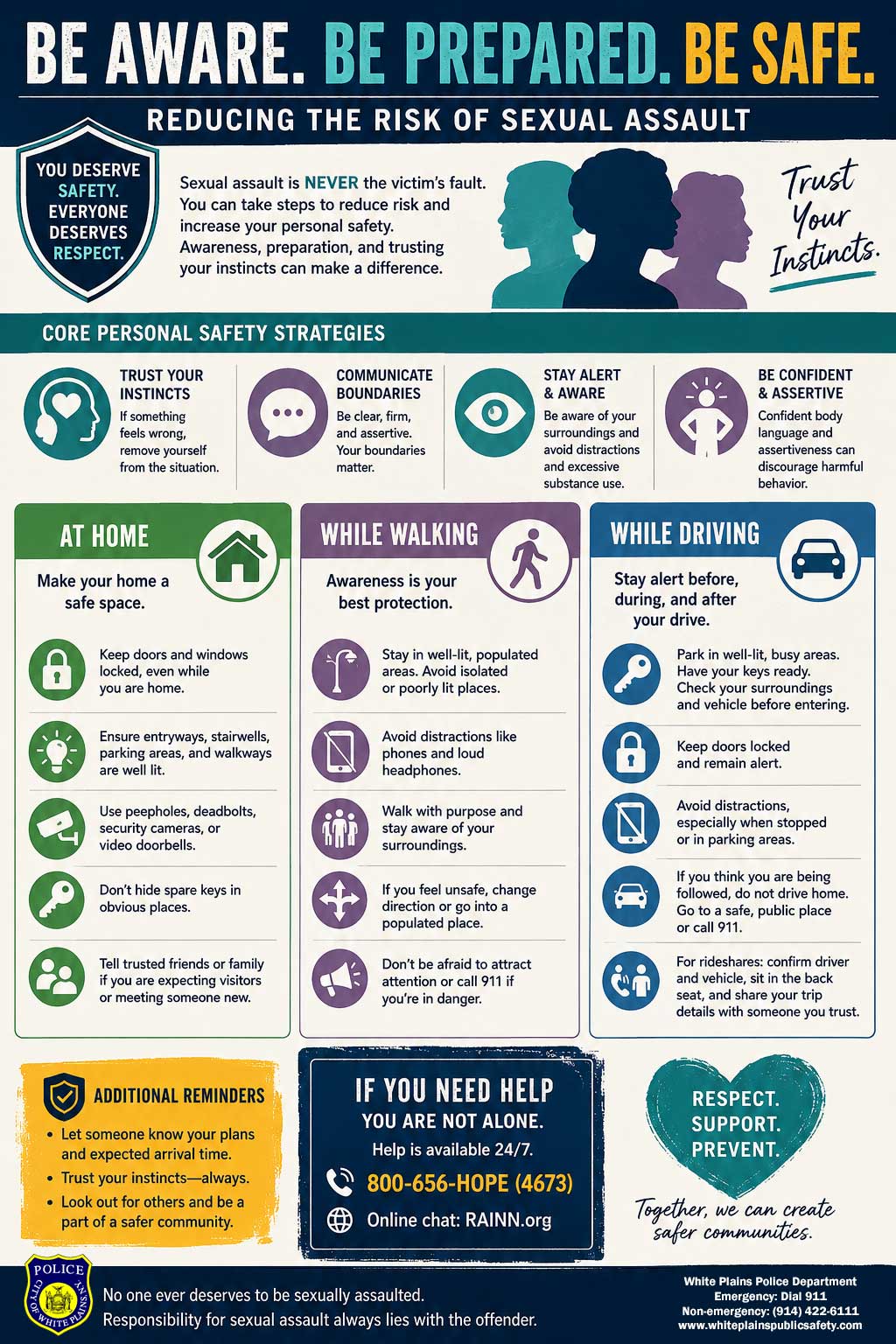
Sexual assault can happen to anyone regardless of age, gender, lifestyle, or location. Responsibility for sexual assault always lies with the offender — never the victim. However, there are proactive personal safety strategies that may help reduce risk, improve awareness, and assist individuals in recognizing potentially dangerous situations before they escalate.
Many sexual assaults are committed by someone known to the victim, and situations that initially appear harmless can quickly become unsafe. Personal safety begins with awareness, confidence, preparation, and trusting your instincts.
General Personal Safety Strategies
Trust Your Instincts
If a person or situation makes you uncomfortable, take those feelings seriously. Leaving an uncomfortable situation early is always acceptable. If you later realize there was no danger, you can explain afterward — but your personal safety should always come first.
Communicate Boundaries Clearly
If someone crosses personal boundaries or makes you uncomfortable, communicate firmly and directly. Clear communication can help prevent misunderstandings and reinforce personal limits. Consent must always be active, mutual, and respected.
Stay Alert and Aware
Remain aware of your surroundings and avoid distractions when possible. Excessive alcohol or drug use can impair judgment and awareness, making it more difficult to recognize potentially dangerous situations.
Be Confident and Assertive
Confident body language and assertive communication can discourage predatory behavior. Walk confidently, maintain awareness, and do not hesitate to seek help or draw attention to yourself if you feel threatened.
At Home Safety Tips
Your home should be a place of security and comfort. Taking preventative measures can help improve safety and reduce vulnerability.
Secure Your Home
Keep entrances and windows locked, even while home during the day.
Ensure entryways, stairwells, parking areas, and walkways are well lit.
Consider using peepholes, deadbolts, chain locks, security cameras, or video doorbells.
Avoid hiding spare keys in obvious locations such as under mats or flowerpots.
Be Cautious With Visitors
Verify the identity of delivery personnel, contractors, or service workers before allowing them inside.
Ask for identification if necessary.
Avoid publicly sharing your location or travel plans on social media in real time.
Stay Connected
Inform trusted friends or family members when expecting unfamiliar visitors or meeting someone new.
Keep emergency contact numbers easily accessible.
Safety Tips While Walking
Whether walking during the day or at night, awareness and preparation are important.
Stay in Visible Areas
Walk in well-lit, populated locations whenever possible.
Avoid isolated shortcuts, alleys, vacant lots, or heavily concealed areas.
Walk facing traffic when possible and remain alert to nearby vehicles or individuals.
Reduce Distractions
Limit phone use and avoid wearing headphones at high volume while walking alone.
Stay aware of your surroundings and the people around you.
If You Feel Unsafe
Change direction or enter a populated business or public place.
If you believe someone may be following you, call 911 or seek immediate assistance.
Do not be afraid to attract attention by yelling, using a whistle, or seeking help from others nearby.
Safety Tips While Driving
Drivers can also reduce risk by remaining alert and prepared.
Before Entering Your Vehicle
Have your keys ready before approaching your vehicle.
Check the interior and back seat area before entering.
Park in well-lit, busy areas whenever possible.
While Driving
Keep doors locked and remain alert at intersections, parking lots, and garages.
Avoid distracted driving or sitting in parked vehicles while focused on your phone.
If you think another vehicle may be following you, do not drive home. Instead, drive to a police station, busy public area, or call 911.
Rideshare Safety
Confirm rideshare vehicle information and driver identity before entering.
Sit in the back seat whenever possible.
Share trip information with a trusted friend or family member.
Looking Out for Others
Everyone plays a role in community safety. If you observe someone who appears vulnerable, isolated, or uncomfortable, safely check on them or notify authorities when appropriate. Bystander awareness and intervention can help prevent dangerous situations before they escalate.
If You Need Help
If you or someone you know has experienced sexual assault, confidential support is available.
The National Sexual Assault Hotline operated by RAINN is available 24 hours a day:
Call: 800-656-HOPE (4673)
Visit: RAINN.org
No one ever deserves to be sexually assaulted. Prevention efforts must continue to focus on education, awareness, accountability for offenders, and creating safer communities for everyone.